Sunday, 26 January 2014

Winter surprises

First aconites on woodland floor
I don't know what has been happening with the weather this year. Spring seems to be continuing, and it's a very wet a windy one. In addition to snowdrops, the first aconites have appeared, and I don't think those can be fooled by a brief warm spell.

At the same time, I am still spotting a surprising number of late autumn fungi. Lots of common ink caps, and just today a troop of large brown fungi that looked a lot like soapy knights, Tricholoma saponaceum, but could be some other similar-looking species.

All this fresh growth has reminded me that it's only five months to go till next mushroom hunting season, and I have barely started on my stash of frozen ceps. So next post  will definitely feature them, and it will be soon!

Soapy knights (possibly), in tight formation.

Thursday, 9 January 2014

Fungi's magic for climate change

Today's snowdrops
It has been a long while since the last post, since my mind has been on subjects far removed from mushrooms. My obsession with all things fungi must have decided to take time off for Christmas - but it's back now, all refreshed and ready to keep me going for yet another year.

And not a moment too soon, as it looks like spring has arrived to Scotland two months early. First spring flowers have come out, buds on the trees are opening, and little birds in my garden just wouldn't shut up. As for the drakes on the mill pond... Ahem. All right, I'll stop right there, but you get the idea.

While I was pondering over the current weather anomaly, a message dropped into my inbox with a link to an article about fungi competing with microbes for nitrogen in soil, therefore preventing the latter from breaking up plant matter. This results in more carbon being retained in the soil, as opposed to being released into the atmosphere to add to the greenhouse effect. The article notes that not all fungi are created equal in this respect. It is just the ecto- and ericoid mycorrhizal fungi that do this, with their soil samples containing 70% more carbon than those of arbuscular mycorrhizal ones.

The most famous example of an ectomycorrhizal fungus is the cep (Boletus edulis). So here is an additional incentive to learn to cultivate it: if only we learned how, in addition to an amazing food source, we wouldn't need to worry about climate change anymore...

Tuesday, 26 November 2013

Winter hunt

Winter is upon us, and I don't care what the calendar says because the temperatures in this part of the world have dropped below freezing already.

Naturally, mushrooms are not keen on the weather, and apart from an occasional bunch of ink caps, there is nothing to be seen among all the frost.

These days my hunts have to happen in mushroom isles of supermarkets. And I can tell you, the latest hasn't been bad at all! Behold - grey chanterelles:

Craterellus tubaeformis, all cleaned and ready to be cooked. Origin: South France, according to the label.
I have a feeling I'm missing out here in the frozen North...
Curiously, despite their name these fungi are only distantly related to the golden chanterelle, and in fact recent molecular phylogenetics studies have placed them in a different genus, Craterellus. Still, when it comes to putting these fungi into omelettes, they are just as good as their better-known cousin.

Sunday brunch: served!

Monday, 11 November 2013

Some parasitic fungi

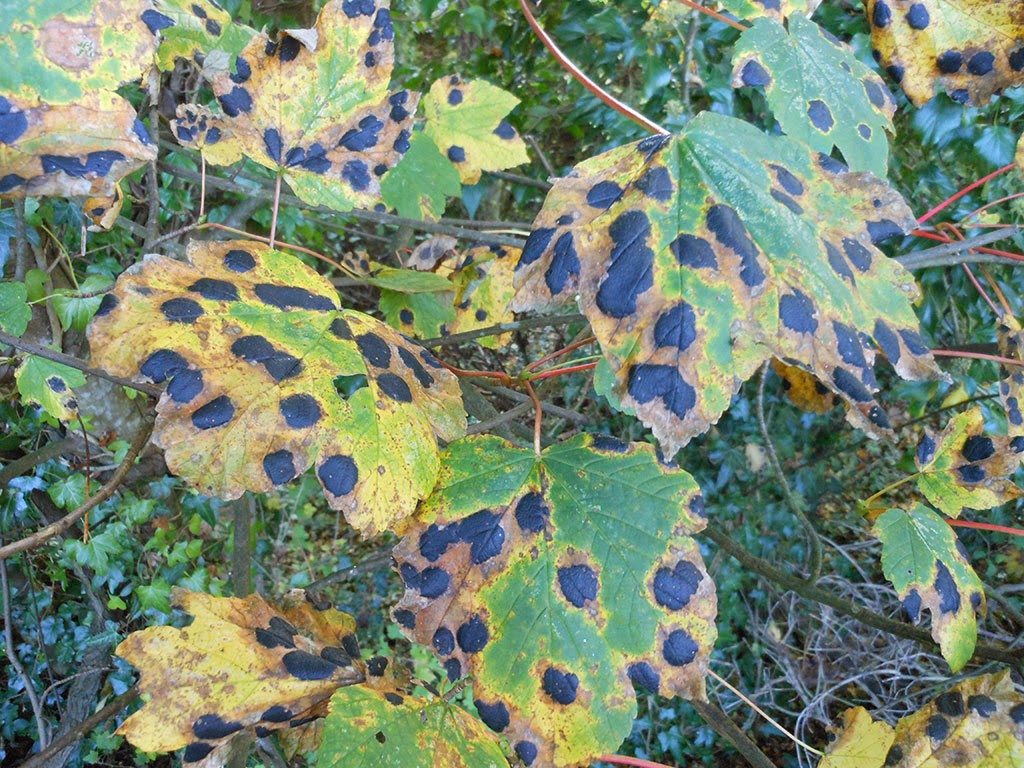
It's a fungus! Rhytisma acerinum
Autumn is almost at the end, with temperatures regularly dropping blow zero at night, but some fungal life is still in evidence. There are some "real" mushrooms on the ground, with stipe, cap, gills and everything, but the true abundance these days is found on tree leaves. It wasn't so obvious during the summer months, but it looks like all maples in the area are heavily infected with sycamore tarspot. Fortunately, it is quite harmless to the trees' long-term health, even though it looks horrible.

But at least, these fungi are feeding on plants, which is not so bad compared to the next photo:

The original of this image can be found here. It's a fungus eat fungus world out there!

Wednesday, 6 November 2013

Taste of the future: mushroom burgers

Portobello burger served in Honolulu
I was pointed today to a news article that praises burgers made with a mixture of beef and mushrooms. Apparently, you can mix up to 50% of mushrooms into beef mince without sacrificing the flavour.

Wow. The wonders of twenty-first century life. And mushrooms, of course.

I totally approve of this development. Meat is an important part of our diet, and eating it allowed our distant ancestors to grow larger brains, become more intelligent, and ultimately build wonderful things like computers and mushroom farms. Unfortunately, it also makes the twenty-first century man edge ever closer to obesity, heart disease and diabetes. Mixing meat with mushrooms seems like a viable half-measure: it seriously reduces the calorie content of the patty, and therefore your waistline is more likely to stay unexpanded.

After all, if it doesn't, you could always go for hardcore:

16 kcal per 100 grams. No half-measures here!
Image credit:
Grilled portobello mushrooms burger